

Setting up an altar: what you actually need (and what you can skip)
A great many rules are written about altars: the orientation, the four elements, what goes on the left and what goes on the right. Those rules belong to particular traditions, and if you follow one, it is yours.
This article is about something else: the table. What you put on it, what it costs, and what you can do without — especially at the start.
An altar is first of all a bounded surface
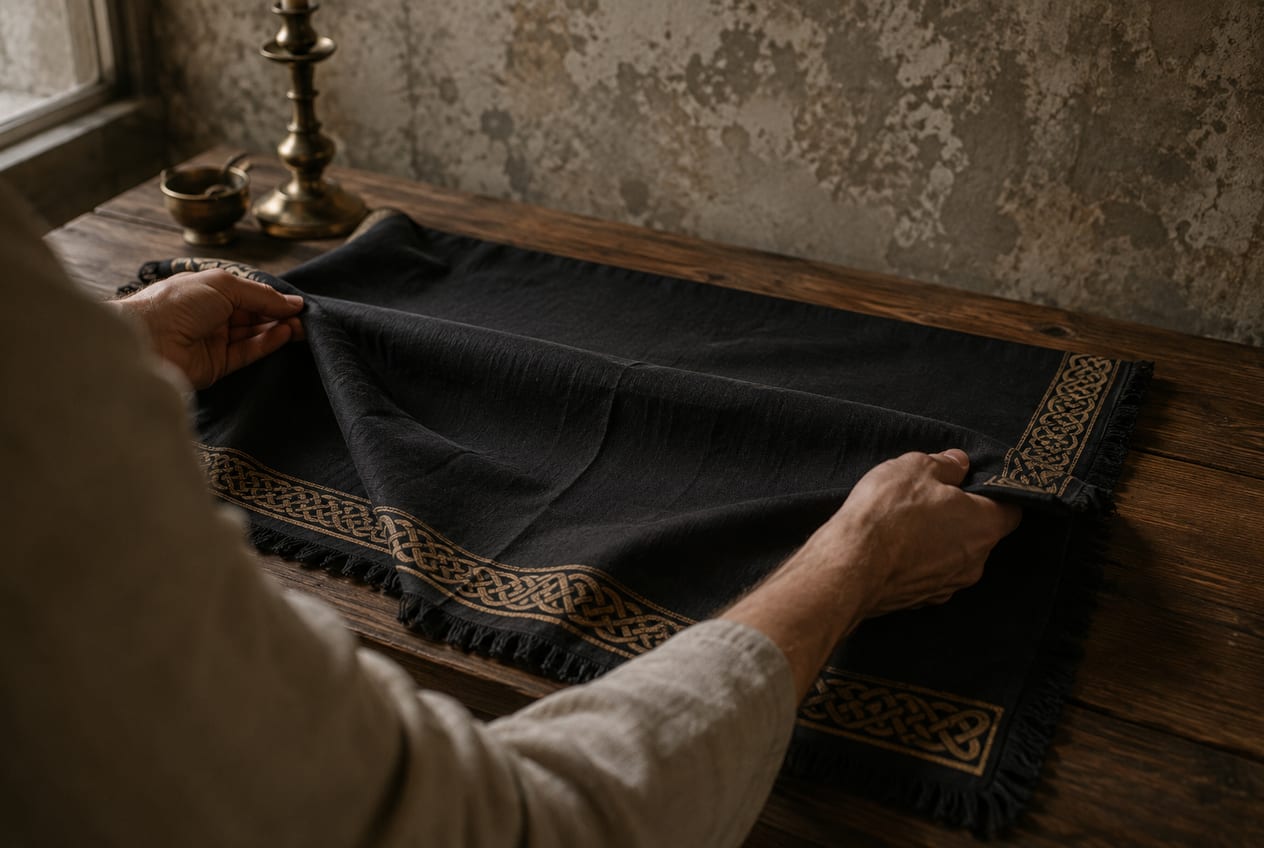
Not a piece of furniture. Not a corner of the house. A surface you have decided to set apart from the rest, and it is that decision that does all the work.
That is why you start with a cloth rather than with an object. A length of fabric unfolded over a chest of drawers, a low table or a trunk marks the boundary: inside it, things are arranged differently. Fifteen euros or so, and the act of unfolding it does more than any purchase that follows.
If you would rather not, a tray, a mat or a board does the same thing. What matters is the edge.
What actually goes on it
In most traditions, whatever their origin, four gestures come back: burning something, holding something, sounding something, putting something away. The rest is decoration.
Burning. A packet of sticks at five euros and a holder at eight are enough. A candle does just as well, and can be lit again.

Holding. A stone you take in your hand. Any of them, so long as you like the feel of it — that is the only criterion that survives daily use.
Sounding. More on that just below.
Putting away. A box, a case, a drawer. An altar you cannot take down becomes a shelf that gathers dust.
Sound, and why it is not decorative
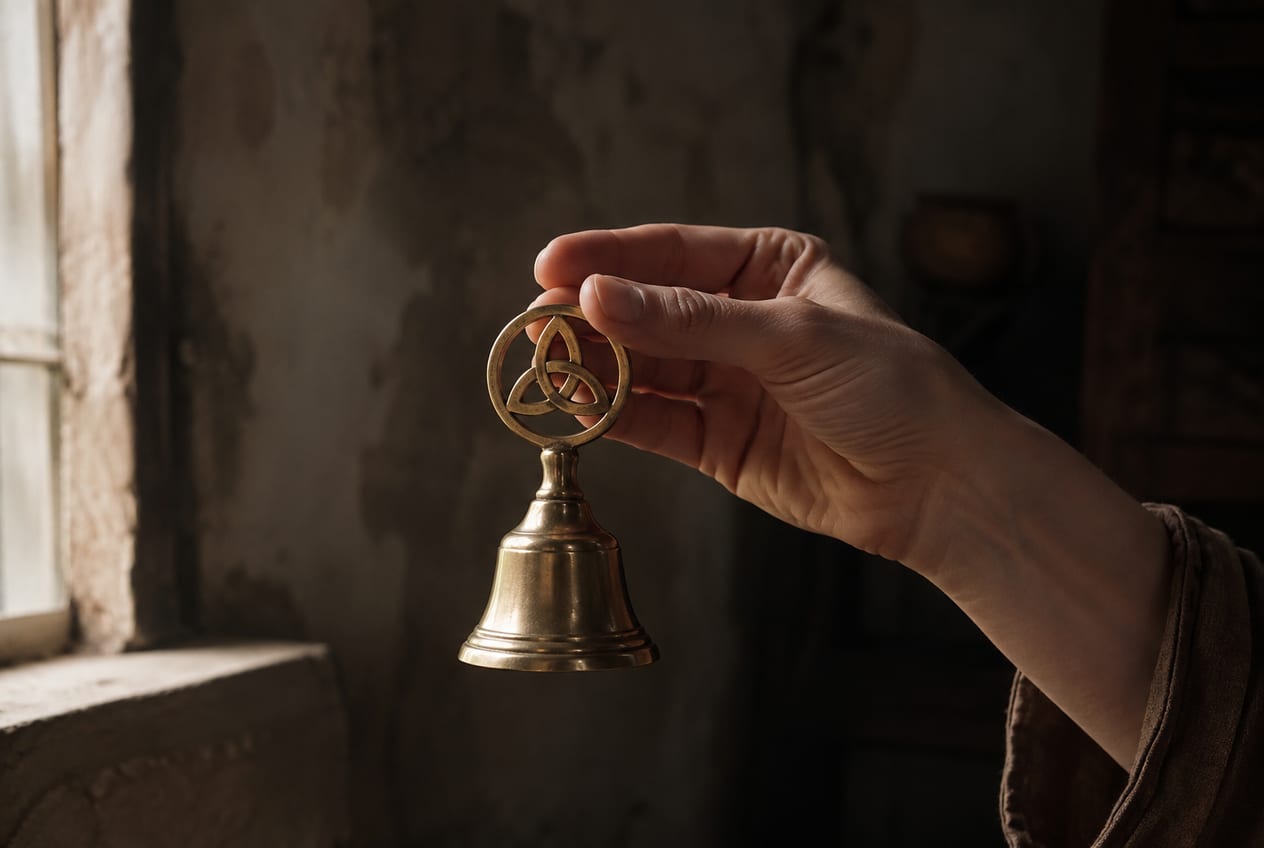
A brass bell with a clear, brief tone is rung to mark the opening and the close. That is its only function, and it is more useful than it looks: it tells whoever rings it that something is beginning, and then that something is finished.
Without that signal, a practice stretches out, frays, and ends up with no edge at all — like the table without the cloth.
Count on about thirty euros. A gong does the same and costs ten times more: it comes much later, if it comes at all.
What you can skip
The large pieces. A gong, a sizeable bowl, a statue: these are objects of commitment, not of departure. You buy them once you already know what you will do with them.
The accessories too — stands, displays, reading mats. They assume a settled practice and a clutter you do not yet have.
And complete sets. A ten-piece boxed set is nine objects you did not choose.
What it really costs
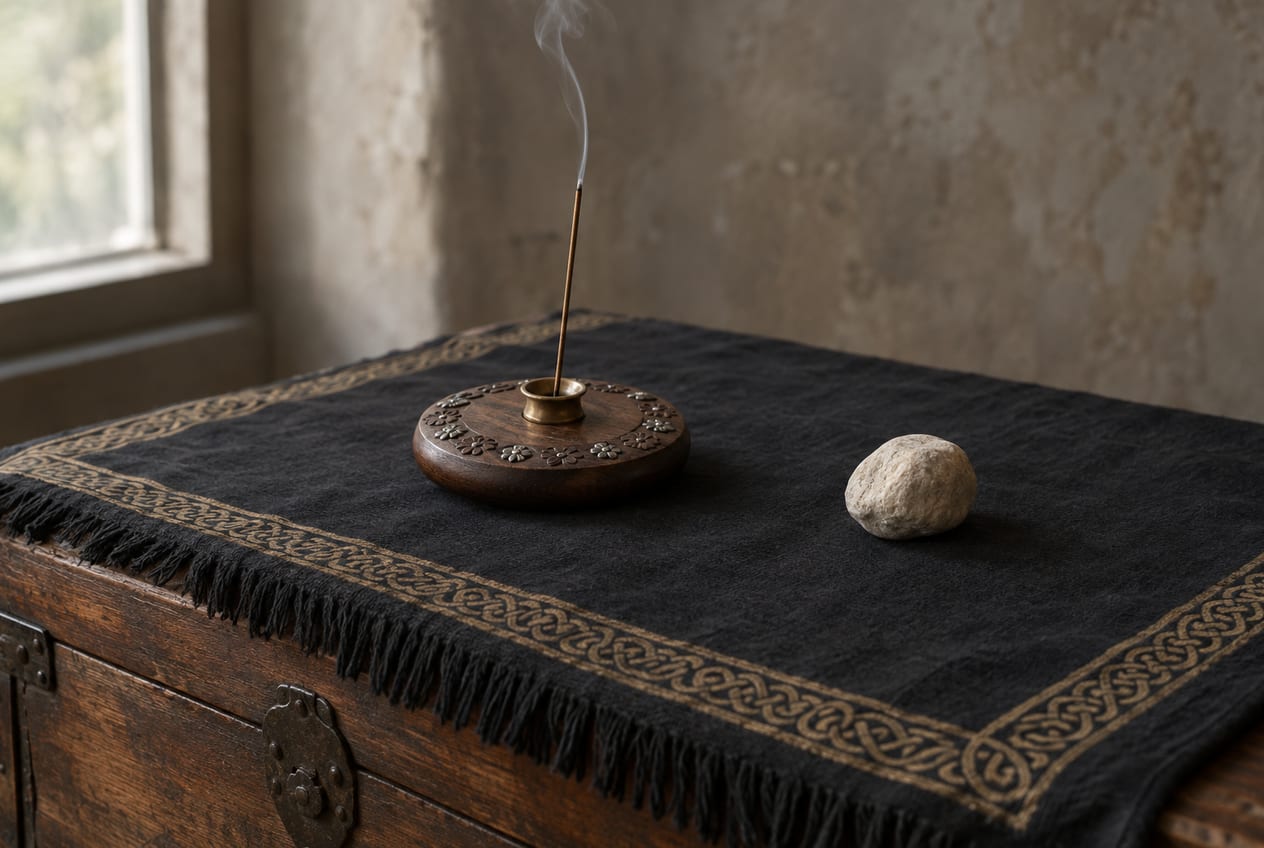
An altar that works comes down to three purchases: a cloth, a packet of incense, a holder. About thirty euros in all, plus the stone if you already have one.
With the bell, count on about sixty. Beyond that you are no longer buying an altar: you are furnishing a room, which is another project and another budget.
What we will not tell you
That an altar protects, attracts, channels or keeps away anything at all. These objects belong to old and respectable traditions; we ascribe no effect to them, and we will promise you nothing.
What a bounded surface does, on the other hand, can be observed: it gives you somewhere to come back to. The rest is your own business.
Every piece mentioned belongs to the Altar & ritual world. If you are starting from nothing, the Starting out page gathers the first pieces, none of them above forty euros.